
SCAI Staging and the Growing Role of AI in Cardiogenic Shock Care
Blog

A shared framework has given shock care a common language. Applying it consistently is where clinicians are beginning to look for support.
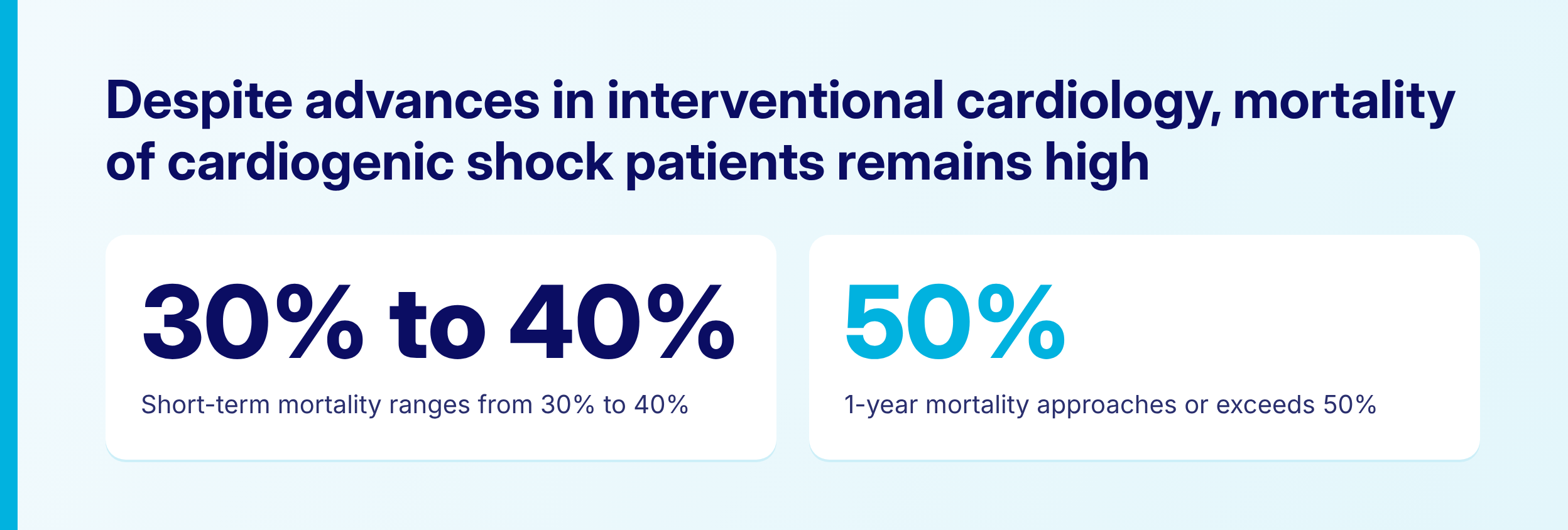
Cardiogenic shock is defined by critically reduced cardiac output and the end-organ hypoperfusion that follows. Despite decades of progress in interventional cardiology, short-term mortality still ranges from 30% to 40%, and one-year mortality approaches or exceeds 50%.¹ Those outcomes are often linked to delays in recognition, inconsistent staging and treatment protocols that differ from one institution to the next.
A common language for severity
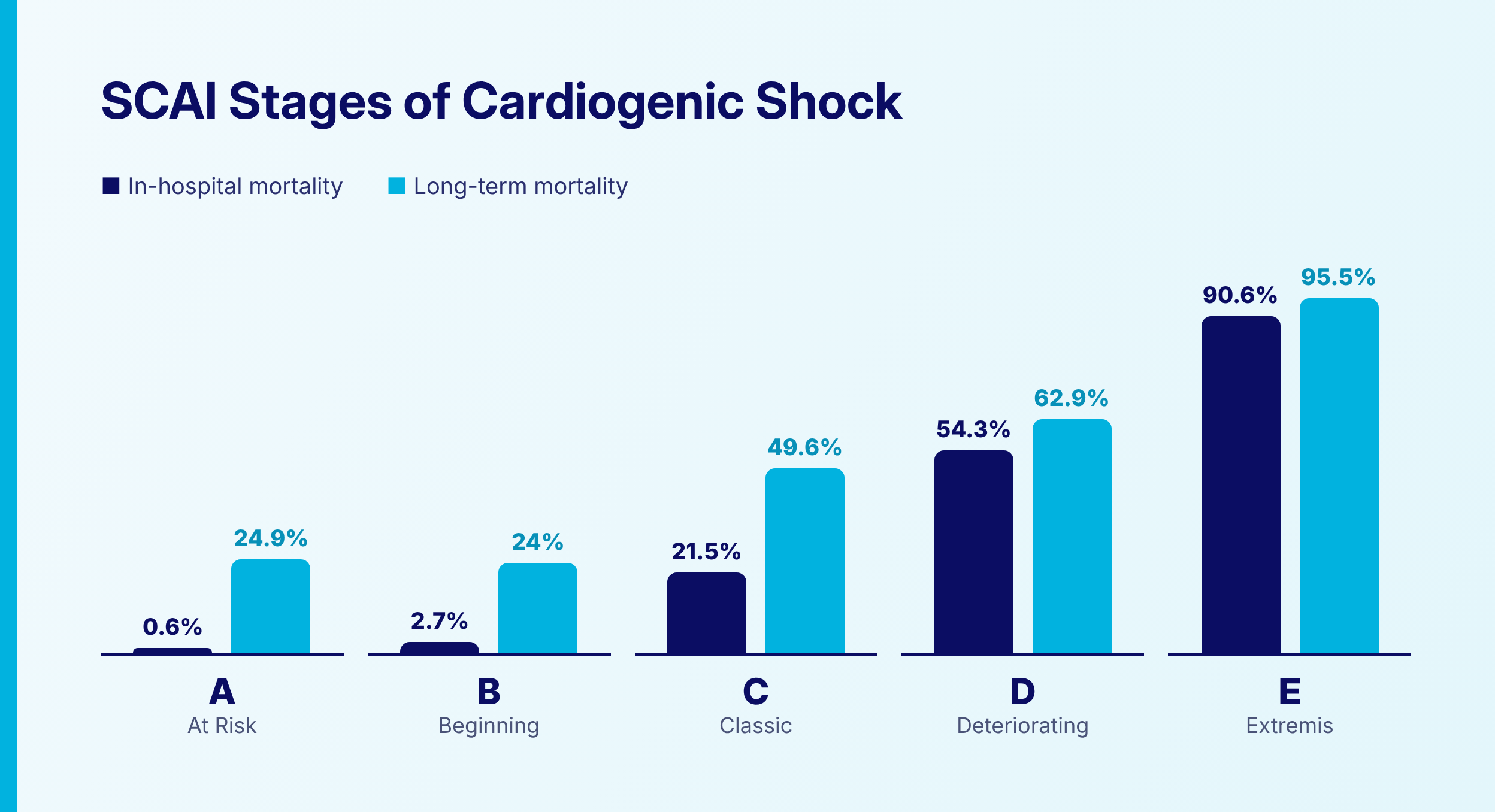
A 2024 paper in The Lancet described cardiogenic shock care as fragmented and endorsed a unified approach to staging and management built on the updated SCAI classification.² The framework places patients on five stages: at risk (A), beginning (B), classic (C), deteriorating (D) and extremis (E). The gradient is steep. Reported in-hospital mortality is 0.6% at Stage A, 21.5% at Stage C and 90.6% at Stage E, and long-term mortality rises from 24.9% to 95.5% across the same range.¹
A shared scale allows the emergency department, the catheterization lab and the cardiac ICU to describe the same patient in the same terms. It also asks a great deal of clinical teams. Staging depends on detailed hemodynamic profiles, timely interpretation of lactate and renal function, and frequent reassessment, often while the patient’s status is changing within hours and meaningful shifts are hidden inside normal variability.
What the literature says about AI
Researchers have begun to examine whether machine learning can help with this burden. A 2023 systematic review and meta-analysis by Popat et al. pooled six studies of machine learning models for cardiogenic shock and reported a pooled area under the curve of 0.808 (95% CI 0.727–0.890). The authors concluded that AI has potential to support the recognition of cardiogenic shock and, through it, to address the condition’s high mortality.³
Physicians are open to support, on their terms
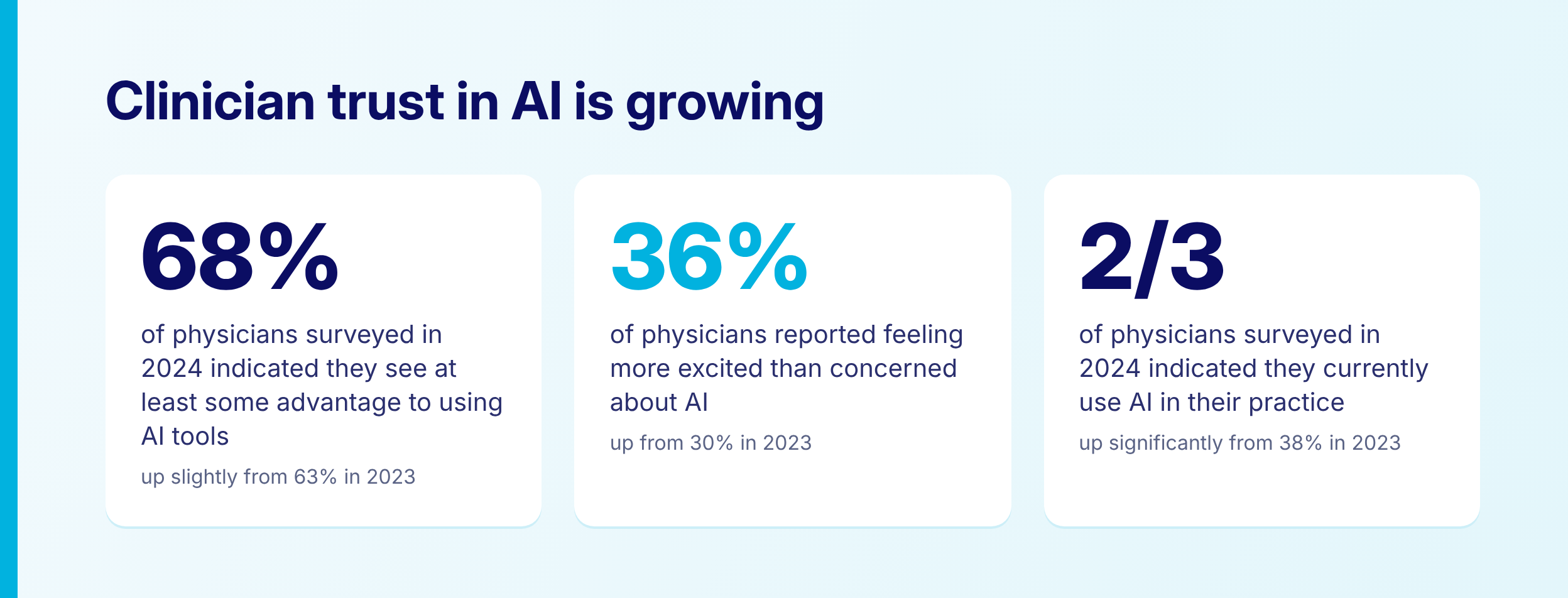
Clinician attitudes are shifting as well. In the American Medical Association’s February 2025 survey, 68% of physicians saw at least some advantage to AI tools, up from 63% the year before, and about two-thirds reported using AI in their practice, up from 38%.⁴ Seventy-five percent believed AI could improve work efficiency. Physicians were equally clear about their conditions: tools should be easy to use, integrate with existing workflows and rest on transparent evidence. They want AI to support their judgment, not to replace it.
Where Etiometry fits
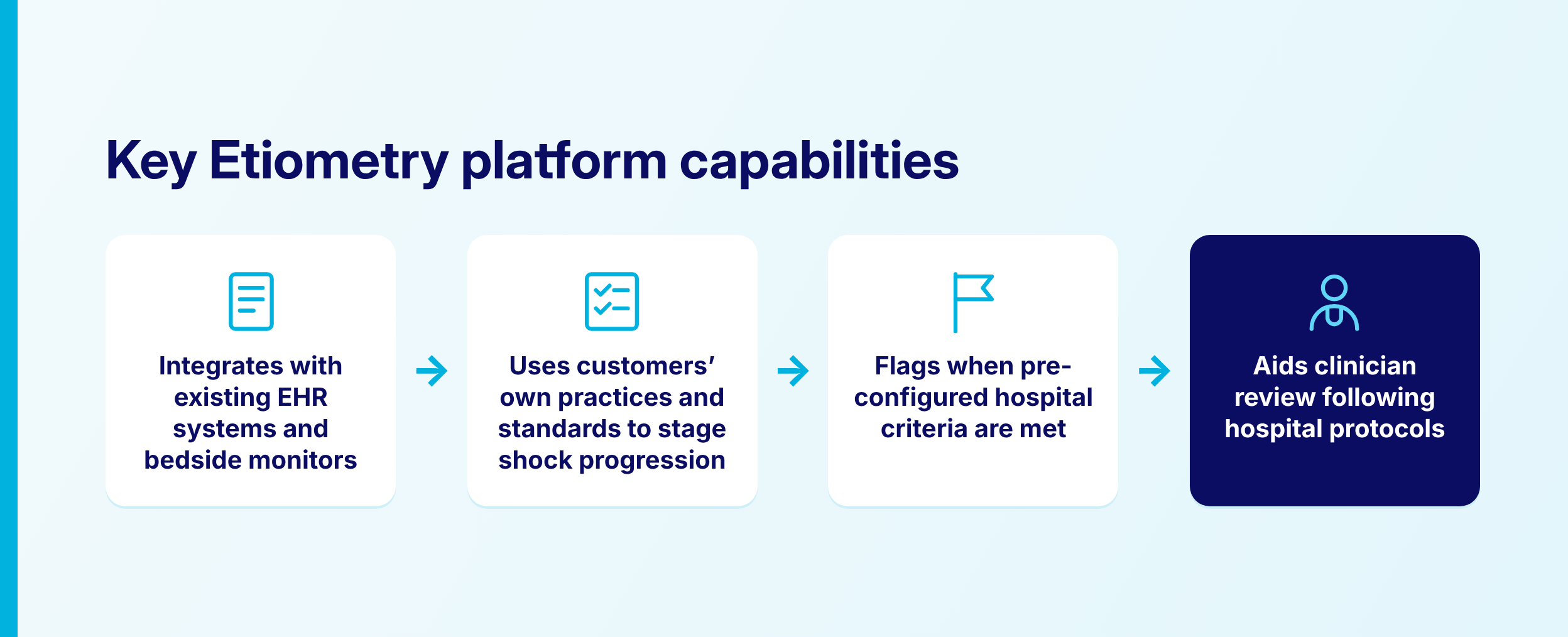
The Etiometry Platform integrates with existing EHRs and bedside devices and applies each hospital’s own SCAI and shock staging criteria. It displays stage changes in near real time so teams can follow a patient’s progression and regression through the stages together, and it flags patients who meet hospital-defined criteria for clinician review. Clinicians review the primary data, and every decision remains theirs.
The Etiometry Platform is not an active patient-monitoring or alarm system and does not diagnose or predict clinical events. It is a clinician-configured decision-support tool and does not independently identify or treat cardiogenic shock. Literature references are included for context and do not reflect Etiometry’s current regulatory labeling.
Source: Etiometry White Paper: Smarter Shock Care: How AI Is Set to Transform the Management of Cardiogenic Shock (ETI-WP-Cardiogenic-Shock-001). References: ¹ Sinha S, et al. 2025 ACC Expert Consensus Statement on the Evaluation and Management of Cardiogenic Shock. JACC. 2025;85(16):1618–1641. ² The Lancet, PIIS0140-6736(24)01818-X. ³ Popat et al. AI in the Early Prediction of CS in Acute Heart Failure or MI Patients: A Systematic Review and Meta-Analysis (PMC10783597). ⁴ American Medical Association, physician sentiment on health care AI, February 2025.
Related
How Documentation, Length of Stay and Capacity Shape Cardiac Surgery Margins
What four years of CABG data from one cardiothoracic ICU suggest about each. Most patients recover from coronary artery bypass grafting along a familiar path: extubation, vasoactive weaning, transfer to the floor, discharge. For some, the postoperative course brings respiratory failure, acute kidney injury or cardiogenic shock. Those complications shape the patient’s recovery, and they […]
What Continuous Physiologic Data Reveals About Cardiogenic Shock
A retrospective analysis compared cardiogenic shock staging built from charted values with staging built from continuous data. The differences were clinically meaningful. In one patient’s record from the analysis, the chart shows a mean arterial pressure of 71 mmHg, and an hour later, 66 mmHg. Read on their own, the two values suggest a patient […]
When Cardiogenic Shock Goes Undocumented: The Clinical and Financial Cost
A missed or unrecorded diagnosis affects the patient first, and the hospital’s ability to care for the next patient soon after. In a busy cardiac ICU, cardiogenic shock is often managed before it is named. Pressors are titrated, labs are trended and the team responds to what the patient’s physiology is telling them. But the […]