
The Documentation Gap Nobody Talks About — And What It’s Costing Your ICU
Every ICU has a documentation problem. Most don’t know the full scope of it. Clinical events happen continuously in high-acuity care — hemodynamic shifts, ventilatory changes, transient complications that resolve before the next chart entry. Clinicians respond to them. They manage through them. And then, in the relentless pace of the ICU, those events may […]
Beyond Escalation: How Clinical Intelligence Supports ICU De-Escalation Decisions
In high-acuity care, clinical attention naturally gravitates toward escalation: adding interventions, increasing support, responding to deterioration. But the other half of intensive care, knowing when and how to safely step back from those interventions, is equally demanding and equally consequential. Prolonged mechanical ventilation, extended vasoactive support, mechanical circulatory support (MCS) and delayed discharge carry real […]
Cardiogenic Shock in Cardiac Surgery Patients: Why Continuous Physiologic Data Matters
Cardiac surgery patients don’t come from a single mold. A valve repair patient, a transplant recipient, a CABG patient, and a patient recovering from aortic surgery each carry a different hemodynamic profile and a different trajectory through the ICU. What they share is vulnerability, particularly to one of the most dangerous complications in post-surgical critical […]
Do ICUs Need Both EHR and Clinical Intelligence Systems?
Most hospitals running a modern ICU have invested heavily in their EHR. The records are thorough and the system integrates billing, compliance and clinical notes into one place. So the question that hospital leaders regularly ask is a fair one: do we need anything else? The answer, for high-acuity care, is yes. Not because the […]
First Automated Hospital-Specific Cardiogenic Shock Classification Tool for Critical Care Teams
Etiometry has received FDA clearance (K254066) for the Etiometry Cardiogenic Shock Tool: the first-ever automated solution for hospital-specific cardiogenic shock classification and tracking (aligned with each institution’s own protocols) using physiologic monitoring data. This is Etiometry’s 11th FDA clearance overall, and the only solution that automates SCAI staging directly from physiologic monitoring data. For cardiac […]
The Business Case for Clinical Intelligence in the ICU. Is it a Worthwhile Investment?
Hospital operating margins remain thin and ICU cost is one of the largest line items in any high-acuity hospital. Clinical intelligence software, used as adjunctive support for clinician-directed care, has been associated with shorter ICU length of stay, fewer unplanned readmissions, and reduced ventilation time. Despite this, many senior hospital leaders are unsure of the […]
What is Clinical Intelligence Software and is it Ready for Clinical Reality?
ICU environments generate high volumes of physiologic data and alerts. “Alarm fatigue” is well documented in the literature, and it is linked to desensitisation, missed deterioration signals, and worse patient outcomes1. Clinical intelligence software can help here. It processes patient data continuously and highlights the risk signals that clinicians have defined as important, so teams […]
Telemetry monitoring in hospitals: moving beyond continuous observation

Telemetry monitoring in high-acuity hospital departments Telemetry monitoring is a core technology used in hospitals to continuously monitor cardiac rhythm and vital signs in patients at risk of deterioration. Telemetry systems allow clinicians to track electrocardiographic (ECG) signals and physiologic data in real time across intensive care units (ICUs), telemetry floors, and other step-down units. […]
MedTech Masters Q&A
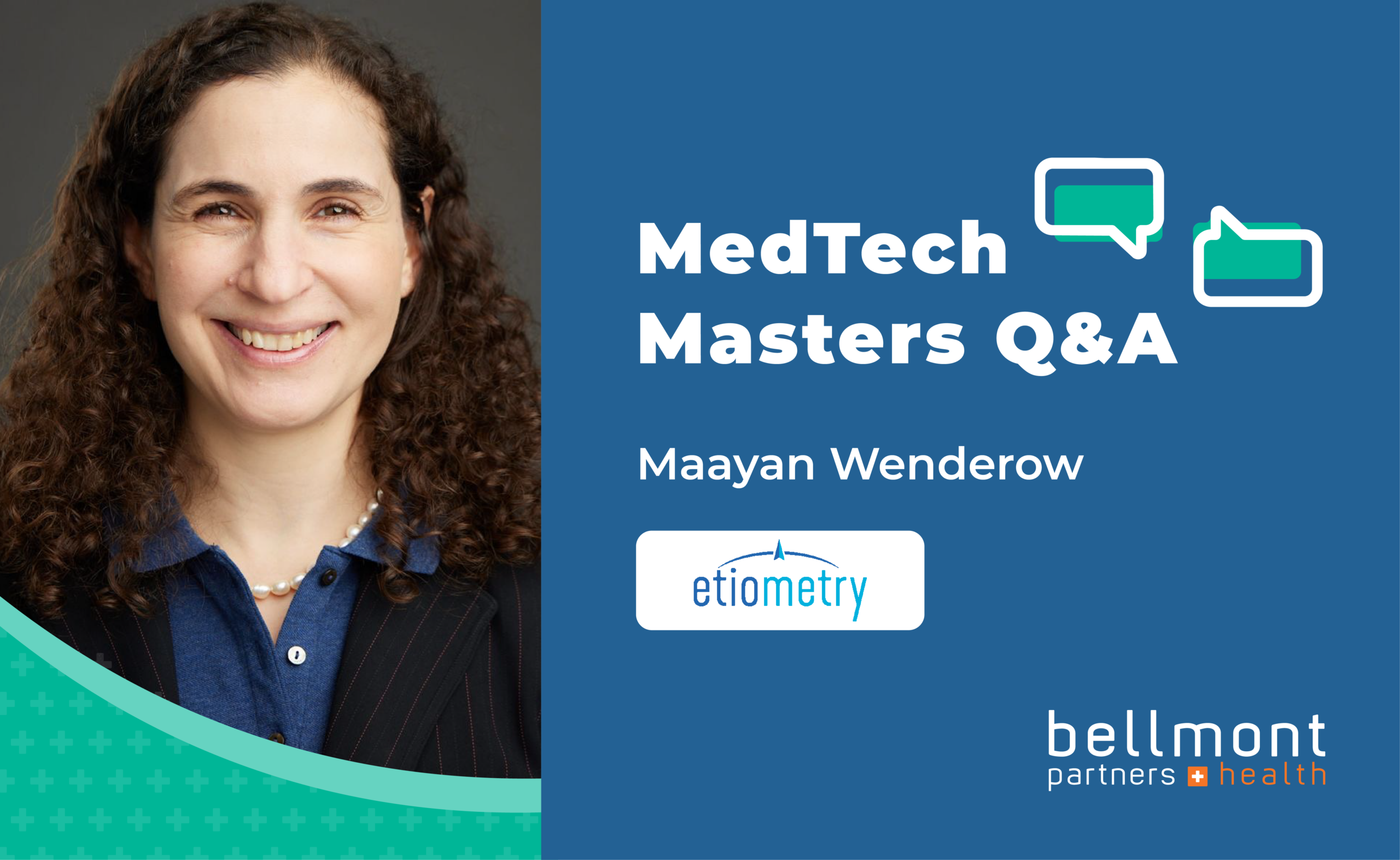
In this MedTech Masters Q&A, Etiometry’s VP of Marketing, Maayan Wenderow, shares insights from her experience leading marketing for a fast-growing clinical decision-support company. She discusses the challenges of positioning complex ICU analytic solutions, aligning messaging with real clinical needs, and supporting long hospital sales cycles. Drawing from her work at Etiometry, she highlights the […]
New study shows how IDO2 index could help bring attention to changes in patient risk sooner. New data in Adult patients.
In intensive care settings, most serious deterioration develops gradually rather than suddenly, with abnormal vital signs detectable hours before significant events. This means that clinicians must monitor subtle physiologic changes to support timely assessment and decision-making.1,2 However, continuous physiologic and laboratory monitoring generates vast amounts of data, and clinicians must constantly decide which signals warrant […]