

Featured Resource
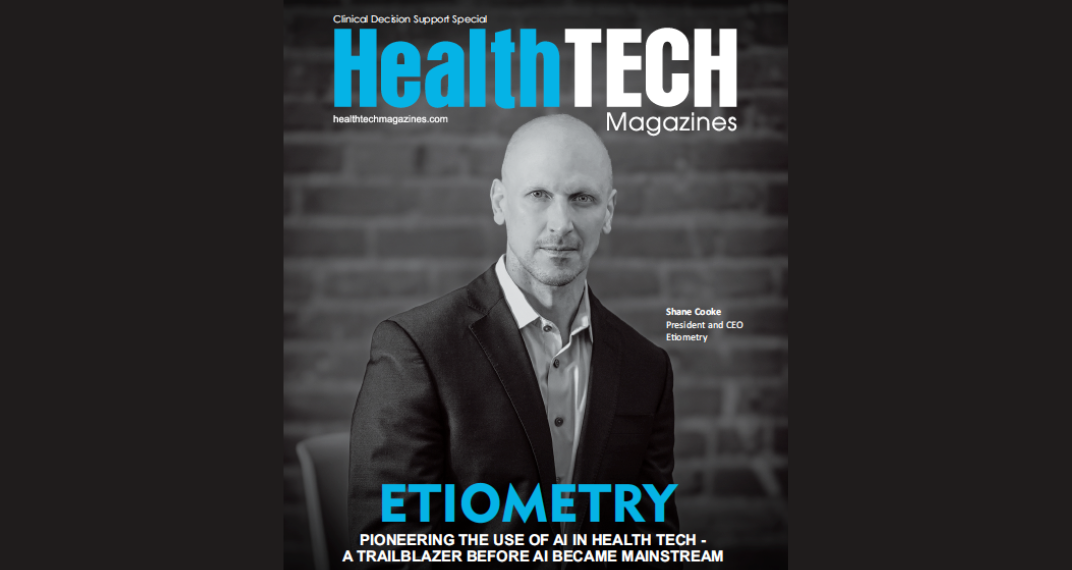
Pioneering the Use of AI in Health Tech – A Trailblazer Before AI Became Mainstream
Article appeared in HealthTech Clinical Decision Support issue, Spring 2024 Talent shortage and burnout are common issues in the healthcare industry. Healthcare facilities and hospitals struggle to optimize their medical staff while keeping operating and administrative costs reasonable. Moreover, the mental load on clinicians to make accurate clinical decisions based on patient data is the […]
Etiometry Named Fierce Healthcare Innovation Award Finalist

Etiometry has been named a finalist for the 2026 Fierce Healthcare Innovation Awards in the Data Analytics/Business Intelligence category. Presented by Fierce Healthcare, the program recognizes innovation that is shaping the healthcare industry. Finalists are selected by an independent panel of industry experts. This recognition reflects our work to bring the clinical data generated in […]
TIME World’s Top HealthTech Companies of 2026

We’re honored to be named one of TIME ’s World’s Top HealthTech Companies of 2026. Developed with Statista, the list recognizes innovative and impactful companies advancing healthcare through technology, evaluated across financial performance, reputation, and online engagement. See the full list: TIME World’s Top HealthTech Companies of 2026
The ‘Messy File Cabinet’ Effect- How AI is Bringing Clarity to Critical Care

In a new DOTmed article, Etiometry Co-Founder and Chief Technology Officer Dimitar Baronov explores the “messy file cabinet” effect in the ICU and how AI can help transform fragmented, high-frequency patient data into meaningful clinical insight. Read the full article to learn how AI is helping bring greater clarity to complex critical care environments: www.dotmed.com
Hamilton Medical, Inc. and Etiometry Partner to Advance Data-Driven Respiratory Care in the ICU
Collaboration combines advanced ventilation technology with AI-driven clinical intelligence to support more proactive, data-driven respiratory management BOSTON, Mass. – Sep. 10, 2026 – Hamilton Medical, Inc. and Etiometry today announced a US partnership to bring AI-driven, data-supported respiratory intelligence to intensive care teams managing mechanically ventilated patients. The collaboration combines Hamilton Medical’s advanced ventilation technology and […]



The Documentation Gap Nobody Talks About — And What It’s Costing Your ICU

Every ICU has a documentation problem. Most don’t know the full scope of it. Clinical events happen continuously in high-acuity care — hemodynamic shifts, ventilatory changes, transient complications that resolve before the next chart entry. Clinicians respond to them. They manage through them. And then, in the relentless pace of the ICU, those events may […]