Etiometry 2025 Highlights and Looking Ahead to 2026
Blog
Etiometry is proud to celebrate a year of meaningful achievements in 2025, driven by close collaboration and a shared commitment to improving patient care.
In 2025, Etiometry achieved significant momentum in advancing AI-driven clinical intelligence and supporting critical care teams:
2025 Highlights:
- Delivered major platform advancements and expanded hospital adoption, informing the care of more than 425,000 patients to date.
- Secured our 10th FDA clearance, validating enhanced cybersecurity protections for hospitals and patients.
- Advanced the platform with deeper incorporation of high-resolution waveform data, enabling richer physiological insights at the point of care.
- Earned the 2025 Digital Health Hub Award – Best in Class: AI in Patient Care at the HLTH conference.
- Published a record number of clinical studies with leading institutions, strengthening evidence across pediatric and adult critical care.
- Continued focus on our Cardiac Critical Care Solution, supporting clinicians by organizing and displaying patient data to aid decision-making in intensive care settings.
- Added the highest number of hospitals in company history, with notable growth among major health systems.
- Expanded internationally, strengthening our presence in Europe and the Middle East through strategic partnerships.
As Shane Cooke, President and CEO of Etiometry, noted, the platform plays a proven role in improving care quality, reducing length of stay and ICU readmissions, lowering costs, easing care team burden, and improving documentation of complications.
Looking Ahead to 2026:
We are building on this momentum with a clear focus on:
- Expanding our presence in the adult cardiac market.
- Accelerating international expansion in Europe and the Middle East.
- Continuing to advance solutions to help identify and manage life-threatening conditions, including cardiogenic shock, respiratory failure, and sepsis/ARDS.
With appreciation,
The Etiometry Team
Related
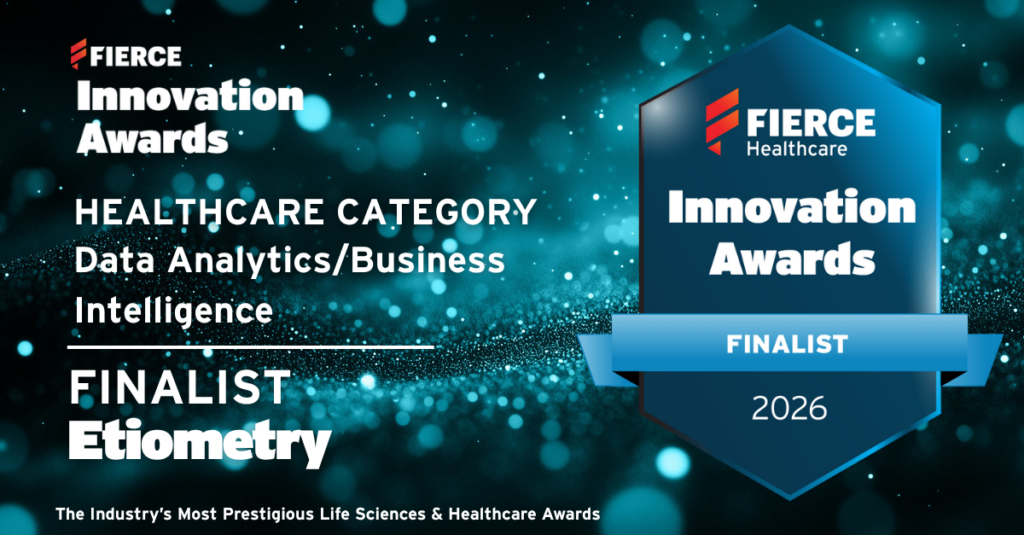
Etiometry Named Fierce Healthcare Innovation Award Finalist
Etiometry has been named a finalist for the 2026 Fierce Healthcare Innovation Awards in the Data Analytics/Business Intelligence category. Presented by Fierce Healthcare, the program recognizes innovation that is shaping the healthcare industry. Finalists are selected by an independent panel of industry experts. This recognition reflects our work to bring the clinical data generated in […]

TIME World’s Top HealthTech Companies of 2026
We’re honored to be named one of TIME ’s World’s Top HealthTech Companies of 2026. Developed with Statista, the list recognizes innovative and impactful companies advancing healthcare through technology, evaluated across financial performance, reputation, and online engagement. See the full list: TIME World’s Top HealthTech Companies of 2026
The ‘Messy File Cabinet’ Effect- How AI is Bringing Clarity to Critical Care
In a new DOTmed article, Etiometry Co-Founder and Chief Technology Officer Dimitar Baronov explores the “messy file cabinet” effect in the ICU and how AI can help transform fragmented, high-frequency patient data into meaningful clinical insight. Read the full article to learn how AI is helping bring greater clarity to complex critical care environments: www.dotmed.com